In recent years, a quiet shift has been taking place across Malaysia’s fruit-growing regions. While the allure of the “King of Fruits” — durian — still dominates headlines and investor attention, a growing number of pragmatic farmers are turning their eyes toward a different golden crop: MD2 pineapple. Known for its sweetness, fragrance, and long shelf life, MD2 has become the preferred fruit for those seeking steady profits and manageable risks.
The Rise of the MD2 Phenomenon
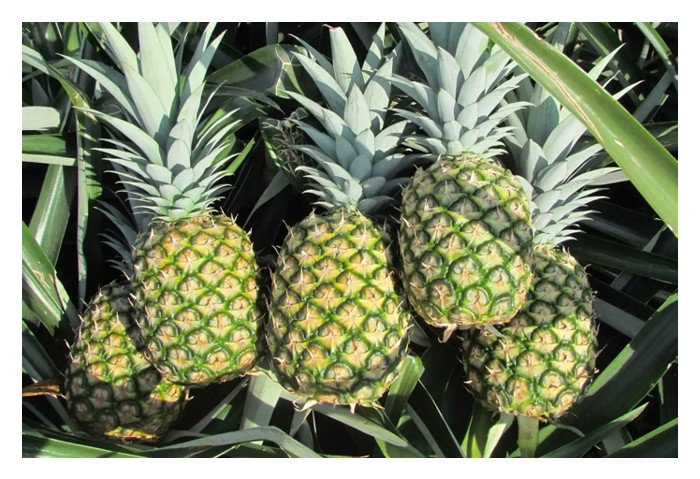
The MD2 variety, originally bred in Hawaii and popularized by multinational exporters, has found a natural home in Malaysia. Its bright golden flesh, uniform size, and high sugar-acid balance make it an export darling, especially in markets like Japan, South Korea, and the Middle East.
But the true driver behind its popularity lies in economics. Compared to durian — particularly high-value varieties like Musang King — MD2 offers a faster, safer, and more predictable return. Farmers can harvest within 12 to 14 months after planting, and the same plant can produce a ratoon crop the following year with minimal extra cost. In contrast, durian demands five to seven years before the first harvest, during which farmers face high maintenance, weather risk, and market uncertainty.
Stable Demand, Lower Risk
Durian prices can swing dramatically — from RM80 per kilogram during export booms to below RM20 when oversupply hits the local market. MD2, on the other hand, benefits from consistent contract farming arrangements and steady export prices ranging between RM2.50 to RM3.50 per kilogram for fresh fruit. Processing opportunities — from canned and juiced products to freeze-dried snacks — further cushion market fluctuations.
Moreover, MD2 farming fits well within integrated agri-business models. Large estates and smallholders alike can adopt it due to its scalability and low maintenance. Unlike durian, which requires expert grafting and tree management, MD2 relies mainly on tissue-cultured suckers and standardized cultivation protocols. This allows farmers to plan yields with high accuracy and reduce dependency on skilled labor.
Smart Investment, Sustainable Future
Environmental sustainability also tilts in MD2’s favor. The crop adapts well to marginal and peat soils, requires less pesticide compared to tree crops, and promotes soil conservation when combined with intercropping or organic mulching systems. With proper farm management, one hectare can produce 60 to 70 tonnes of fruit per cycle, offering gross returns of RM120,000 to RM150,000 annually — far exceeding typical short-term crops.
Financially, the initial investment for MD2 (around RM40,000–RM60,000 per hectare) is far lower than durian, which can exceed RM100,000 per hectare before the trees even bear fruit. This faster turnaround makes MD2 particularly attractive to young farmers and investors seeking cash flow stability rather than speculative gain.
The Bottom Line
While durian will always be Malaysia’s proud icon, MD2 pineapple represents the smart farmer’s choice — balancing profit, sustainability, and market access. As one Johor grower put it, “Durian makes headlines, but pineapple pays the bills.”
In an era where agricultural success depends not just on passion but on planning and predictability, MD2 is proving to be the fruit that may quietly outperforms the king fruit.
Source: Professional Platform
Note: For Reference Only