In the world of oil palm cultivation, few threats have proven as stubborn and devastating as Ganoderma boninense — the fungal pathogen responsible for Basal Stem Rot (BSR). For decades, this silent killer has haunted plantations across Malaysia and Indonesia, quietly rotting the very foundation of the country’s most valuable crop. While billions have been lost to its spread, the uncomfortable truth remains: there is still no true “cure.” Prevention, therefore, is not merely advisable — it’s essential.
A Silent and Costly Invader
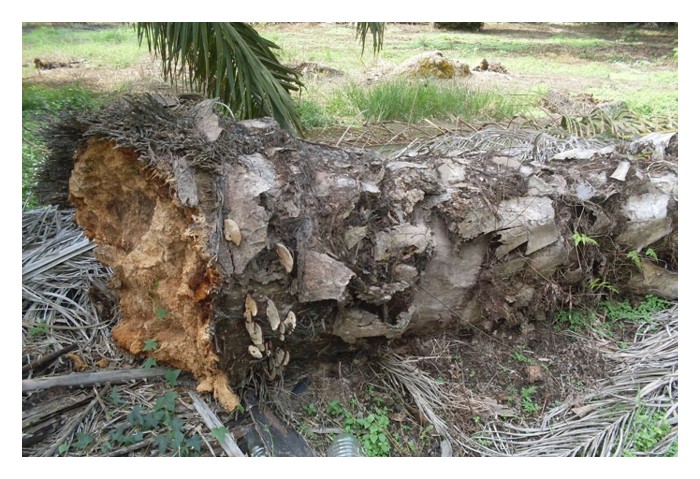
Ganoderma attacks the base of the palm, slowly decaying internal tissues and disrupting nutrient flow. Affected palms show subtle symptoms at first — yellowing fronds, reduced fruit set, and leaning trunks — but once infection sets in, death is inevitable. In advanced stages, the characteristic “mushroom-like” fruiting bodies appear at the base, signifying irreversible internal damage.
According to recent industry reports, up to 5–10% of palms in mature estates are affected annually, with some older plantations suffering losses exceeding 50%. For an industry built on long-term productivity, this disease poses a serious economic and sustainability challenge.
The Limits of Cure
Many research efforts — from biological control agents and soil treatments to resistant planting materials — have shown promise, but none have provided a permanent cure. The complexity lies in the biology of Ganoderma: its spores can survive in the soil for years, spreading invisibly through root contact or contaminated debris. Even after replanting, infection often re-emerges, particularly in areas where infected palms were previously removed improperly.
Prevention: The True Line of Defense
The adage “precaution is better than cure” has never been more relevant. The best defense against Ganoderma starts long before planting. Pre-emptive measures — such as sanitation, early detection, and field mapping — can drastically slow its spread.
- Field Sanitation: Removing and properly disposing of infected palms (preferably by chipping or incineration) prevents the fungus from persisting in the soil. Leaving dead trunks to rot is an open invitation for Ganoderma spores to multiply.
- Trenching and Isolation: Creating physical barriers between infected and healthy palms reduces root-to-root transmission.
- Soil Rehabilitation: Incorporating beneficial microbes such as Trichoderma or planting green manure crops like Mucuna bracteata can help restore soil health and suppress pathogenic fungi.
- Resistant Varieties and Mixed Planting: New hybrids with partial resistance are emerging, and intercropping systems may diversify root zones and microbial communities, reducing vulnerability.
The Way Forward
What’s urgently needed is a shift in mindset — from reactive to proactive. Plantation managers must invest in disease surveillance systems, drone-assisted mapping, and AI-driven predictive models that can flag infection hotspots before visible symptoms appear. Smallholders, too, need access to training and support to implement basic field hygiene and monitoring.
The palm oil industry has built its reputation on innovation and resilience. As Ganoderma continues its silent march across plantations, taking early, decisive action could determine whether Malaysia remains a global palm oil leader or faces diminishing returns in the decades ahead.
In the fight against Ganoderma, prevention isn’t just better than cure — it may be the only cure we have.
Source: Professional Platform
Note: For Reference Only