Commercial cultivation of high-value forest trees like Acacia mangium can be profitable in the right context, but whether it offers better returns than fruit crops depends on a range of economic, ecological and market factors.
1. Economic Profile of Acacia mangium Plantations
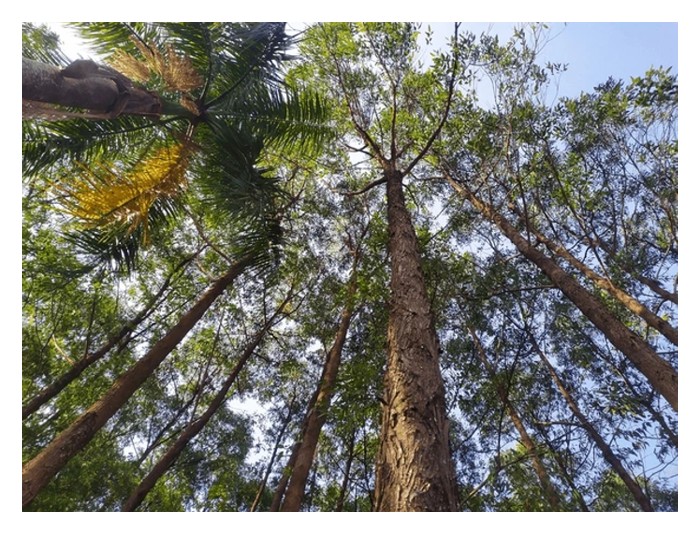
Acacia mangium is a fast-growing tropical tree widely used in plantation forestry across Southeast Asia and the Pacific. It is planted primarily for industrial wood products — pulp and paper, timber, veneer and charcoals — and can be harvested on relatively short rotations (often 6–8 years) compared with traditional timber species.
Economic analyses in places like Vietnam show that A. mangium plantations can generate positive net present values (NPV) and high internal rates of return (IRR) over one rotation. In one study, A. mangium delivered returns with IRRs in the mid-20s to low-30s percent range, comparable with or higher than some agricultural investments, and positive NPV when discounted at typical rates.
However, these returns are typically realized at the end of a long rotation — unlike annual or perennial crops — meaning capital is tied up for years before revenue appears. Markets for wood products are also volatile and depend on infrastructure, industry demand and global wood prices.
Strengths of A. mangium plantations:
- Fast growth rates and adaptability to poor soils reduce establishment risk.
- Shorter rotation periods than many traditional timber species.
- Demand from pulp, paper and wood industries supports commercial markets.
- Can improve soil fertility and ecological conditions where grown.
Challenges:
- Returns depend heavily on final harvest markets, which are susceptible to price fluctuation and transport costs.
- Long payback periods (often multi-year) make A. mangium a long-term investment, not suitable for farmers needing cash flow sooner.
- Requires skilled plantation management to avoid losses from pests, fire or storm damage.
2. Economic Profile of Fruit Crops
Fruit crops — such as durian, mango, banana, or citrus — generally provide annual or seasonal revenue, allowing farmers to recoup investment faster than forest plantations. Market prices for fruit can be lucrative; for example, high-value fruits like durian or mangoes can fetch strong premiums in export markets especially with niche varieties. Agroforestry projects that combine fruit trees often achieve IRRs of 20 % to 40 % in some tropical settings — often significantly outperforming monoculture forestry.
Advantages of fruit crops include:
- Faster cash flow — profits often begin within 1–3 years after establishment.
- Diversified income streams — fruit yields, by-products (e.g., leaves, biomass), and potential value-added processing.
- Market demand and branding opportunities, particularly for export-oriented fruit varieties.
But fruit farming also has risks:
- High input costs for labor, pest control, irrigation and disease management.
- Perishable products require good supply chains and marketing to avoid waste or low prices.
- Yields and prices can fluctuate due to weather, pests and global demand trends.
3. Comparative Summary
| Aspect | Acacia mangium Plantation | Fruit Crops |
| Revenue timing | Long-term (multi-year rotation) | Short/medium-term (annual to multi-year) |
| Returns (IRR/NPV) | Potentially good under supportive markets | Often higher and faster payback |
| Risk profile | Market volatility, long payback | Production and price risks, but quicker adjustment |
| Labor intensity | Moderate & periodic | High & ongoing |
| Cash flow | Delayed until harvest | Regular seasonal income |
| Market dependence | Wood industry and policy | Consumer demand and export markets |
4. When Forestry May Outperform Fruit Crops
Plantation forestry like Acacia mangium can be competitive or even preferable:
- On lands with low agricultural potential where fruit crops struggle.
- Where farmers have long-term capital and access to stable wood markets.
- In regions with government incentives, subsidies or carbon credits for reforestation and afforestation.
- When integrated into agroforestry systems, blending trees with fruit crops to combine early income with long-term timber value.
Conclusion: Acacia mangium and similar high-value forest trees can offer solid returns, but for most smallholders or farmers seeking faster liquidity and higher short-term profits, fruit crops generally outperform pure forestry plantations on a per-hectare and cash-flow basis. The best choice depends on land quality, capital horizon, market access and risk tolerance, and many successful systems blend both forest trees and fruit crops.
Source: Professional Platform
Note: For Reference Only