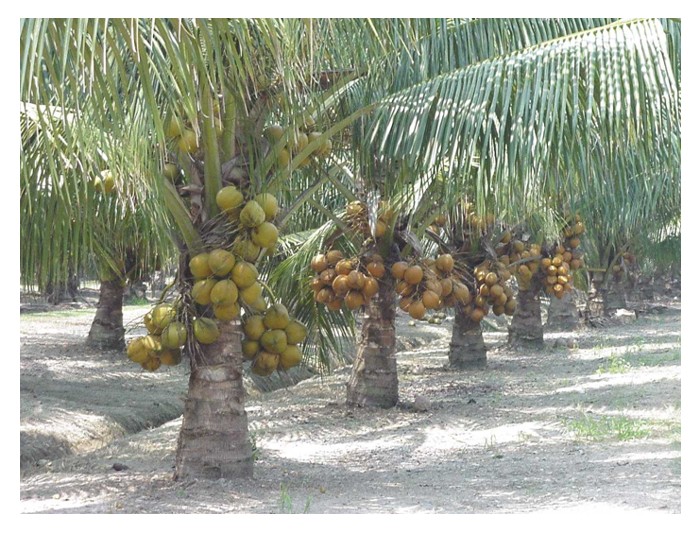
Coconut cultivation is widely favoured by farmers across tropical regions because it combines relatively low labour requirements with attractive and stable returns. As a perennial crop with diverse end uses, coconut offers both economic resilience and operational simplicity, making it especially appealing to smallholders and plantation-scale growers alike.
One of the main reasons farmers prefer coconut cultivation is its comparatively low labour demand once the plantation is established. During the initial stages, labour is required for land preparation, planting, and early maintenance such as weeding and fertilisation. However, after the trees mature — typically within four to six years — daily management needs decline significantly. Coconut palms are hardy and well adapted to tropical climates, tolerating periods of drought and thriving in a wide range of soil types. Harvesting is generally carried out every 30–45 days, and the tasks involved are routine and predictable, allowing farmers to plan labour efficiently or rely on contract workers rather than maintaining a large permanent workforce.
In addition, coconut plantations do not require intensive pruning or complex crop management compared to many annual or high-value horticultural crops. Pest and disease pressures are relatively manageable, and modern integrated pest management practices further reduce the need for frequent intervention. This simplicity lowers operational stress for farmers and makes coconut cultivation suitable even for ageing rural populations or part-time farmers who may not be able to devote daily attention to their fields.
Beyond labour efficiency, coconut cultivation is attractive because of its strong and diversified income potential. Almost every part of the coconut palm has commercial value. Fresh coconuts, copra, coconut oil, coconut milk, coconut water, fibre (coir), shells, and even palm sugar derived from coconut inflorescence contribute to multiple revenue streams. This diversity helps farmers reduce market risk; when prices for one product decline, others may remain profitable. In recent years, growing global demand for plant-based oils, health beverages, and natural fibres has further strengthened coconut’s market outlook.
Coconut palms also have a long productive lifespan, often yielding for 40 to 60 years or more. This longevity allows farmers to spread establishment costs over decades, resulting in favourable long-term returns. Compared to short-cycle crops that require frequent replanting, coconut provides a steady and predictable income once the trees reach full bearing. Intercropping during the early years — with crops such as bananas, pineapples, legumes, or vegetables — can generate additional income before the palms mature, improving overall farm profitability.
Furthermore, coconut cultivation aligns well with sustainable and low-input farming systems. The palms contribute to soil stability, carbon sequestration, and microclimate regulation. Organic residues from husks and leaves can be recycled as mulch, reducing fertiliser costs and improving soil health over time. These factors not only enhance farm economics but also support environmentally responsible agriculture.
In conclusion, coconut cultivation is favoured by farmers because it offers a rare balance of low labour requirements, diverse income opportunities, and long-term profitability. Its resilience, versatility, and compatibility with sustainable farming practices make coconut an enduring and reliable crop choice in tropical agriculture.
Source: Professional Platform
Note: For Reference Only