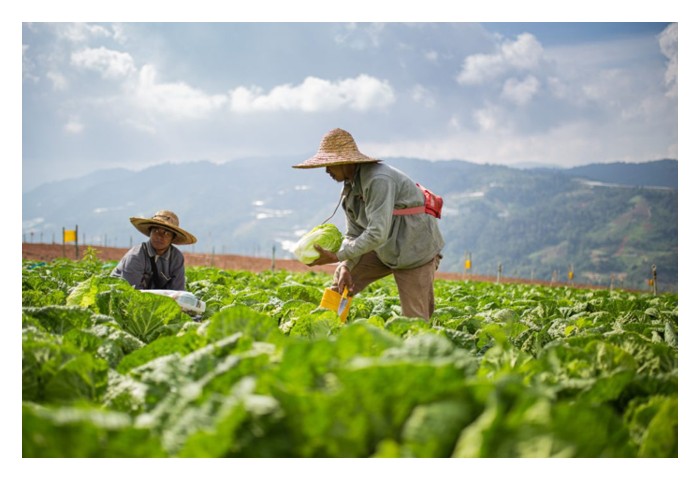
For a beginner in Malaysia, leafy vegetables are generally easier to start with, but fruit vegetables often give better long-term returns once basic skills are in place. The best choice depends on whether your priority is learning speed and low risk or higher profit potential.
1. Leafy vegetables: easiest entry point
Leafy vegetables such as kangkung, sawi, bayam, lettuce, pak choy, and choy sum are the most beginner-friendly crops in Malaysia.
Why they are easy ?
- Short crop cycle: 18–35 days from planting to harvest
- Low startup cost: simple beds, basic fertiliser, minimal trellising
- Fast feedback: mistakes are visible quickly, allowing rapid learning
- Strong local demand: sold daily in wet markets, pasar tani, restaurants
- Climate tolerant: many thrive in Malaysia’s heat and rainfall
Returns :
- Gross income per cycle is modest, but multiple cycles per year (10–15) compensate.
- Net profit margins typically range 20–40%, depending on fertiliser and labour.
- Ideal for cash flow farming rather than wealth building.
Main challenges
- Price volatility due to oversupply
- Highly perishable (must sell quickly)
- Labour-intensive harvesting
Leafy vegetables are best for beginners who want to learn soil, fertilisation, pest control, and market rhythm with minimal financial risk.
2. Fruit vegetables: higher skill, better returns
Fruit vegetables include chilli, cucumber, brinjal (eggplant), tomato, bitter gourd, okra, long beans, and pumpkin.
Why they are harder ?
- Longer growing period (2–4 months)
- Require better pest and disease management
- Need trellising, pruning, or staking
- Sensitive to nutrient imbalance and water stress
Why returns are better ?
- Higher price per kilogram
- Continuous harvesting over weeks or months
- Better suited for contract farming and restaurants
- Some crops (chilli, tomato) have strong upside during shortages
Returns
- Net profit margins of 30–60% are achievable with good management.
- Chilli and cucumber are especially popular due to consistent demand.
- Crop failure risk is higher, but successful harvests pay well.
- Fruit vegetables reward growers who understand integrated pest management (IPM), fertiliser scheduling, and simple record-keeping.
3. Which should a beginner choose?
Best strategy for beginners in Malaysia
- Start with leafy vegetables for 3–6 months
- Use early income to improve infrastructure (netting, drip irrigation)
- Gradually introduce 1–2 fruit vegetables
- Focus on market access first, not maximum yield
| Aspect | Leafy Vegetables | Fruit Vegetables |
| Difficulty | Very low | Medium |
| Capital needed | Low | Medium |
| Time to harvest | Very short | Medium |
| Risk | Low | Medium–high |
| Profit potential | Moderate | High |
| Learning value | Excellent | Advanced |
4. Final recommendation
For a beginner in Malaysia:
- Leafy vegetables are easier and safer to begin with
- Fruit vegetables offer better returns once basics are mastered
If your goal is learning + stable income, start with leafy greens.
If your goal is profit growth, move into fruit vegetables as soon as your skills and confidence improve. The most successful small farmers in Malaysia combine both, using leafy vegetables for cash flow and fruit vegetables for profit expansion.
Source: Professional Platform
Note: For Reference Only